


Briefing on Biological Materials Application Laboratory
Briefing on Biological Materials Application Laboratory
Photo:
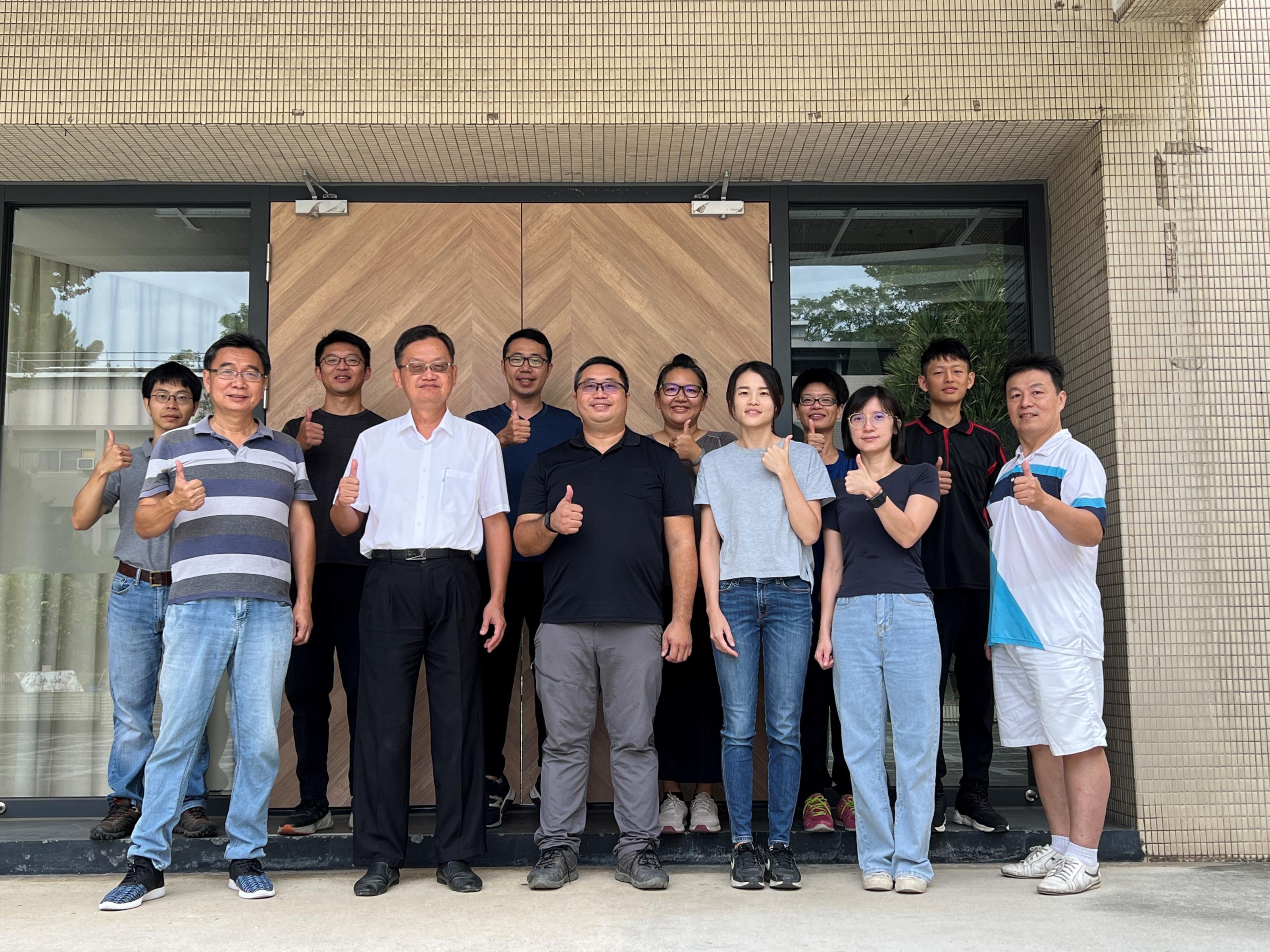
Goal:
- To develop the local bio-pesticide (natural materials, microbial agents and biochemical agents), bio-fertilizer (microbial fertilizers, organic fertilizers) and multi-application of microbial resources.
- To develop the techniques of agricultural surplus material value-added and recycling products.
- To conduct the research achievement to field application, promotion and counseling, technical transfer and product commoditization.
- To study the ecology of diseases and insect pest of agricultural crops, develop the control practices and counseling better pest management technique for farmers.
Personnel:
Four researchers (two are doctor, the others are doctor candidate), three plan assistants and five contract workers.
Facilities and Equipments:
The facilities included 5 liters scale solid-phase microbial fermentation tank, 10 liters scale microbial fermentation tank, 20 liters scale I for 2 fermentation tank, 200 liters scale pre-mass preparation microbial fermentation tank, microbial incubation chambers, vertical-type sterilizers, high performance liquid chromatography, spectrophotometer, light microscope, homogenizer, electrophoresis gel imaging system, desk type microbes freezing dry machine, microbes colony automatic smearing and detection analyzer, continue high speed separator, and high speed centrifuge, -30℃ low temperature freezer, -80℃ super low temperature freezer, etc.
Ongoing Works:
- Using functional microbes to enhance the adaptation capacity of vegetative crops to water stress condition.
- Study the new-type microbial agents for the control of diseases and insect pest on fruit trees.
- To develop the key technique of mass fermentation and evaluate product commoditization of the entomogenic fungi TCTeb01 strain.
- To establish the pre-cooling technique for high temperature harvest of guava in summer as evaluated the application of non-chemical pesticide materials.
- Evaluation the control efficiency of yeast and yeast-like strains for the control of the citrus storage diseases.
- Evaluation the control efficiency of plant derived materials for the control of the rice diseases and insect pests.
- Integration of climate alarming model and diseases and insect pest management on rice.
- To develop the homogenization technique of agricultural surplus materials and study the technique of soil improvement agent.
- To develop the applied techniques of agricultural surplus material recycling products for eco-friendly cultivation on blueberry.
- To process the plan of national soil ecological conservation green network by built the friendly production environment for fruit trees in the western region.
Recent Research Results:
- Our research room invest in functional microorganism research development and industrial application, and propose solutions for the demand of environmental sustainability and agricultural product safety. Include to develop the techniques of agricultural surplus material value-added and recycling products to alleviate the burden on the ecological environment, to alleviate damage to crops caused by abiotic stresses (flooding, low temperature, etc.), to develop microbial fertilizers that convert unavailable phosphorus in soil for crops use, to alleviate biological stress and developing microbial pesticides and biological pest control techniques. Those achievements won the 2021 2nd National Agricultural Science Award as the preferred team in the environmental sustainability category.
- About organic and environmentally friendly farming business, our research room is responsible for the organic agriculture and environmentally friendly farming business of our institute, assisting this organic cultivation park to pass the organic agricultural product verification (organic transition period) in 2020, and obtain the organic transition period agricultural product verification label; after 3 years of tracking during the organic transformation period Inspection and certification of organic agricultural products in 2023.