
:::
Briefing on Crop Protection Laboratory
Briefing on Crop Protection Laboratory
Photo:
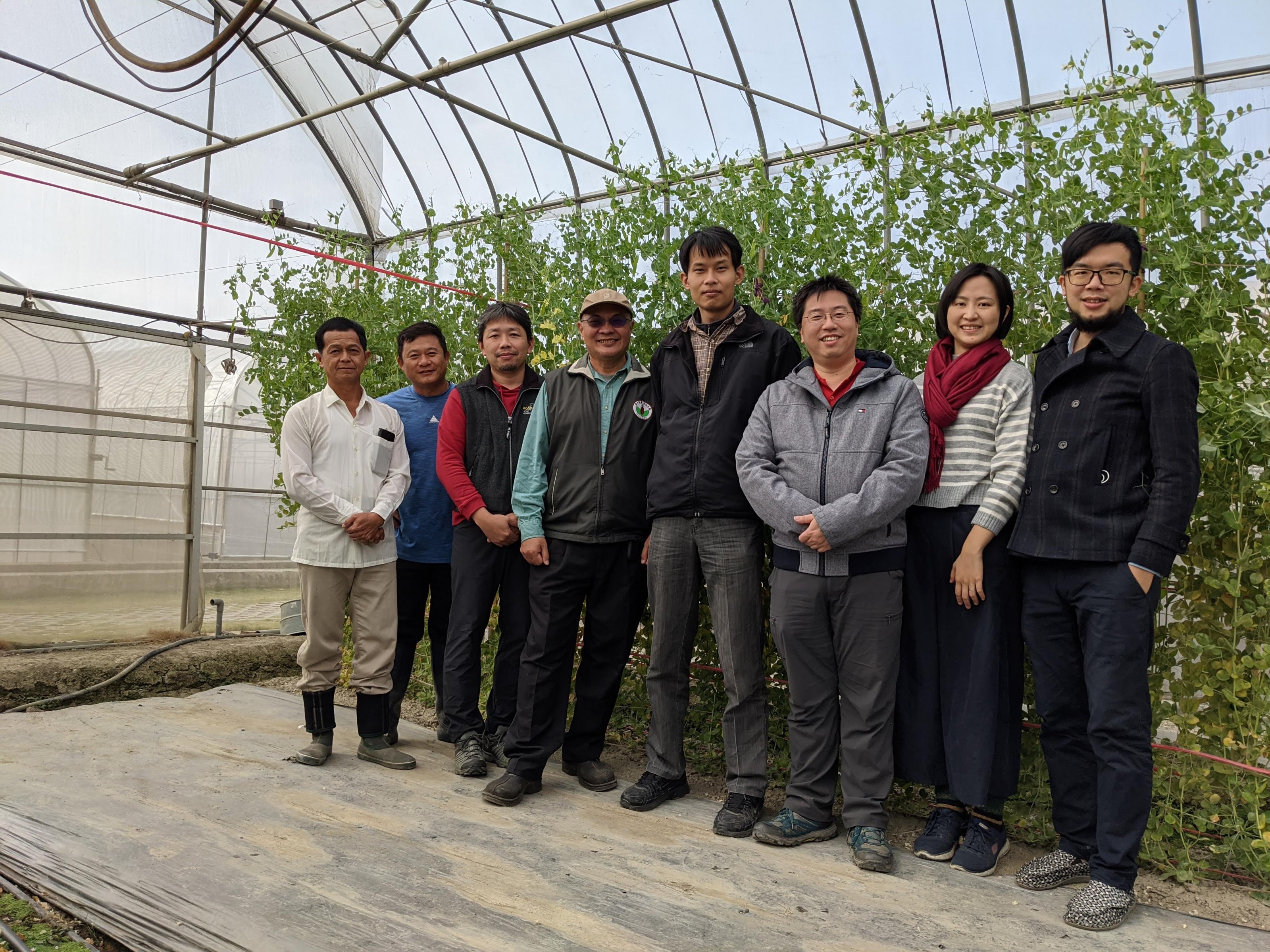
Goal:
- Establish epidemic monitoring and control techniques for significant crop pests and diseases to minimize the losses caused by pest and disease outbreaks.
- Develop non-pesticide control techniques for crop pests and diseases to reduce pesticide usage.
- Provide guidance to farmers on safe pesticide use to ensure that agricultural products meet safety standards.
- Establish "Crop Pest and Disease Diagnosis and Consultation Service Stations" to offer control prescriptions for targeted and effective pesticide use.
Personnel:
5 researchers (2 with Ph.D., 3 with Master's degrees), 2 technicians, 5 hired personnel, 3 project assistants, and 1 reserve plant doctor.
Facilities and Equipments:
Including one high-speed centrifuge, ultra-low temperature freezer, one differential interference phase contrast optical microscope, one motorized stereomicroscope, one automatic immune spectrum analyzer, one micro-shaking homogenizer, one polymerase chain reaction instrument, one automatic inoculation machine, one greenhouse, and two insect rearing rooms, etc.
Ongoing Works:
- Study on novel microbial formulations for the control of fruit tree pests and diseases.
- Long-term ecological monitoring of agricultural ecosystems - grapes and passion fruit in the central region.
- Image recognition technology for grape pest identification.
- Impact of pesticide environmental dispersion on insect predators - sensitivity assessment of important predators to high-dose pesticides.
- Establishment of a green network for national ecological conservation - promoting the creation of environmentally friendly production environments for western fruit crops.
- Research on pest control techniques for harmful ants in agricultural areas.
- Integrated control techniques for citrus nematodes.
- Experimental testing of improved sulfur solution for disease control in honey gold mangoes.
- UVC ultraviolet light treatment for the control of important grape diseases.
- Isolation, identification, and sensitivity analysis of fruit rot fungi in cantaloupes.
- Isolation and identification of stem blight (fungal disease) in sweet peppers - a newly recorded disease.
- Detection of waterborne fungi - jar fungi associated with the transmission of melon necrotic spot virus in muskmelons.
Future Research Prospect:
- Development and Progress of Commercialization for Po Formulation (Development and Application of Entomopathogenic Fungi as Biocontrol Agents).
- Commercial Development and Application Promotion of Nematode Microbial Formulations (Screening and Potential Assessment of Nematode Egg Parasitic Fungi).
- Efficacy Testing and Application of Pesticide-Free Plant Protection Materials for Pest Control.
- Diffusion of Environmentally Friendly Plant Protection Materials in the IPM System for Bell Peppers.
- Demonstration and Promotion of Integrated Pest Management with Reduced Pesticide Usage for Peas and Green Onions.
- Development and Progress Planning of IPM Management Models for Major Grape Pests.
- Cross-Disciplinary and Integrated Research and Development - A. Development of Grape Pest Identification System; B. Development of Downy Mildew Prediction Model; Development of an Intelligent Precision Disease Monitoring System for Grapes (collaboration with National Taiwan University's contracted project).
- Development and Industrial Application of Grape Residue Disposal Techniques: Disease Testing.
Recent Research Results:
- Research on the production technology of virus-free bamboo shoots in the years 2010-2013, establishing the production technology for virus-free bamboo shoot seedlings.
- Implementation of a crop health management production system from 2011 to 2023, focusing on establishing cultivation, soil fertilization, and pest and disease control management techniques for edible fern, luffa, grapes, peas, and bell peppers. Conducting field observation meetings, technical seminars, compiling health management cultivation manuals, etc., to accelerate the adoption of crop health management production.
- Research and development of late blight management techniques for grapes in 2014-2015, guiding grape farmers in mastering the "timing of pesticide application" and "early bagging" techniques, resulting in minimal damage from late blight. In 2021, the project "Development and Application of Integrated Management Strategies for Grape Late Blight" won the 2nd Sustainable Good Farmer Award (IPM Award) in the Technical Innovation Group.
- Selection of beneficial microorganisms in the soil for the control of root-knot nematodes in cucurbits in 2022-2023. Conducting tests on egg parasitism rate, pot experiments, enzyme secretion activity tests, and plant growth promotion tests to evaluate the future development direction of commercial formulations.
- Technology transfer of 50% water-soluble solution of phosphorous acid (Dragon Eagle Biotechnology, 2021/08/01).
- Non-exclusive licensing of the technology "Improved Sulfur Solution Formulation and Application Techniques for Crop Foliar Disease Management" (currently announced).
https://www.tcdares.gov.tw/en/ws.php?id=8871